Introduction
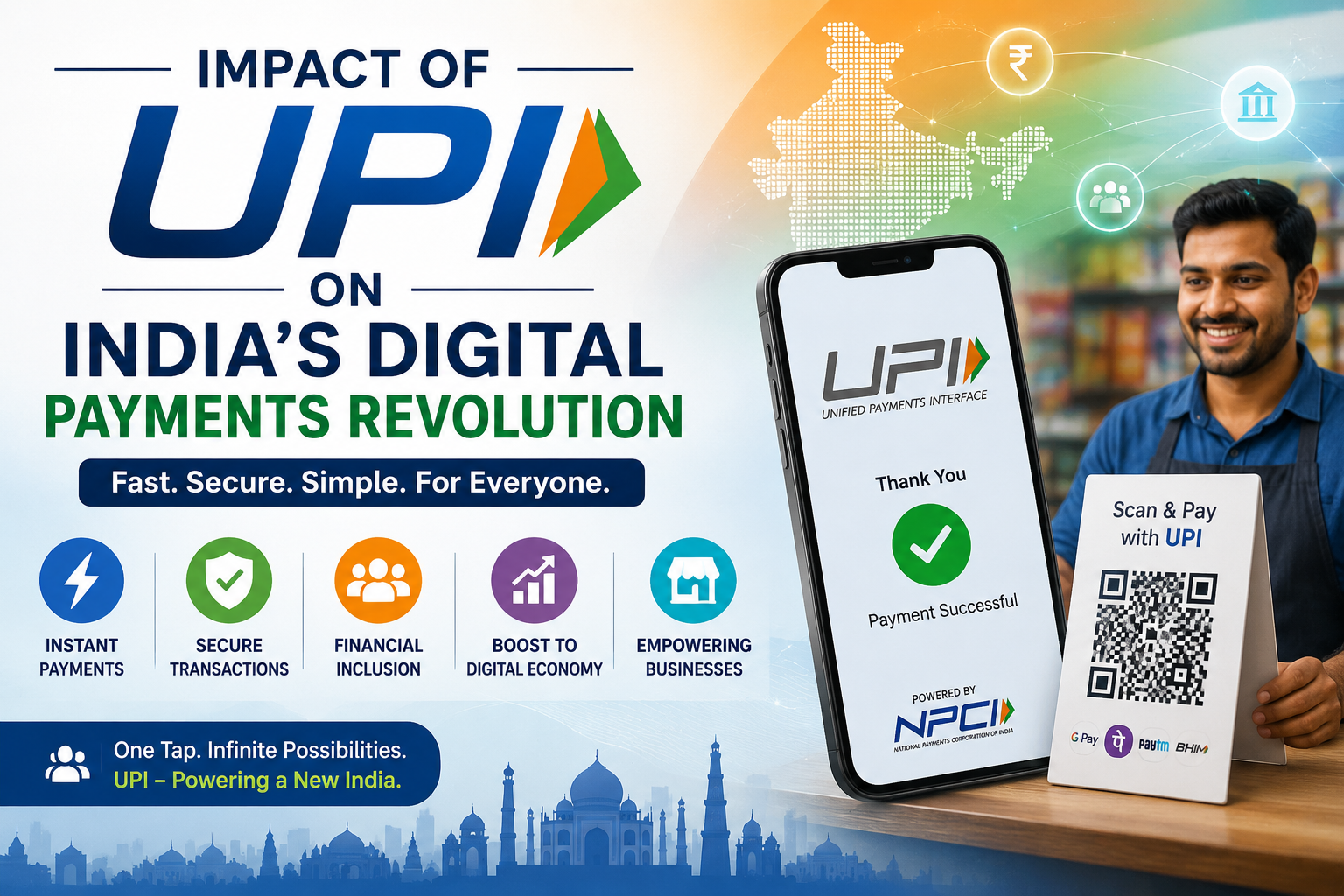
The Impact of UPI on India’s Digital Payments Revolution has been nothing short of remarkable. Over the past few years, the Unified Payments Interface (UPI) has transformed the way Indians send, receive, and manage money. From small roadside vendors to large businesses, UPI has made digital transactions faster, safer, and more convenient than ever before.
Today, India is recognized as one of the world’s leading digital payment economies, and UPI has played a major role in this transformation.
What is UPI What is UPI and Why Is It Important in India’s Digital Payments Revolution?
Unified Payments Interface (UPI) is a real-time payment system developed by the National Payments Corporation of India (NPCI). It allows users to transfer money instantly between bank accounts using a mobile phone. With UPI, users can make payments through QR codes, mobile numbers, UPI IDs, and bank account details without needing cash or cards.
Popular UPI applications include Google Pay, PhonePe, Paytm, and BHIM.
The Impact of UPI on India’s Digital Payments Revolution
1. Increased Digital Payment Adoption
One of the biggest impacts of UPI has been the rapid adoption of digital payments across India. People from both urban and rural areas are now using smartphones to make instant payments. This has significantly reduced dependence on cash transactions.
2. Convenience and Speed
UPI enables users to transfer money within seconds, 24/7. Unlike traditional banking methods that often involve delays, UPI transactions are completed instantly. This convenience has encouraged millions of Indians to switch to digital payments.
3. How UPI Supports Financial Inclusion in India’s Digital Payments Revolution
The Impact of UPI on India’s Digital Payments Revolution can also be seen in financial inclusion. UPI has helped bring banking services to people who previously had limited access to financial institutions. Anyone with a bank account and smartphone can now participate in the digital economy.
4. Impact of UPI on Small Businesses and Digital Payments Growth
Small shop owners, street vendors, and local businesses have greatly benefited from UPI. They can now accept payments through QR codes without investing in expensive payment infrastructure. This has increased transparency and improved business efficiency.
5. Reduction in Cash Dependency
UPI has encouraged a cashless economy by providing a simple and secure alternative to cash payments. Consumers no longer need to carry large amounts of cash, reducing risks associated with theft and loss.
6. Boost to India’s Digital Economy
The growth of UPI has accelerated India’s digital transformation. E-commerce platforms, online services, and digital businesses have witnessed significant growth due to easy payment options. This has contributed to economic development and innovation.
Challenges Faced by UPI
Despite its success, UPI faces certain challenges:
- Cybersecurity threats and online fraud.
- Dependence on internet connectivity.
- Digital literacy gaps in some rural regions.
- Technical issues during peak transaction periods.
Addressing these challenges will be essential for sustaining the growth of digital payments in India.
Future of UPI in India
The future of UPI looks promising. Innovations such as UPI Lite, credit on UPI, international UPI payments, and offline payment solutions are expected to further expand its reach. As smartphone penetration and internet accessibility continue to improve, UPI will likely become even more integral to India’s financial ecosystem.
Popular UPI Payment Apps
- Google Pay
- Phone Pay
- Paytm
- BHIM
- Amazon Pay
- CRED
- WhatsApp Pay
- Mobikwik
- Freecharge
- Tata Neu
Conclusion
The Impact of UPI on India’s Digital Payments Revolution has transformed the country’s payment landscape. By making transactions fast, secure, and accessible, UPI has empowered individuals, businesses, and communities across India. As technology continues to evolve, UPI is expected to remain at the forefront of India’s journey toward a digitally empowered economy.